The Federal and Most State Judicial Branches Have at Least These Three Levels in The Court System
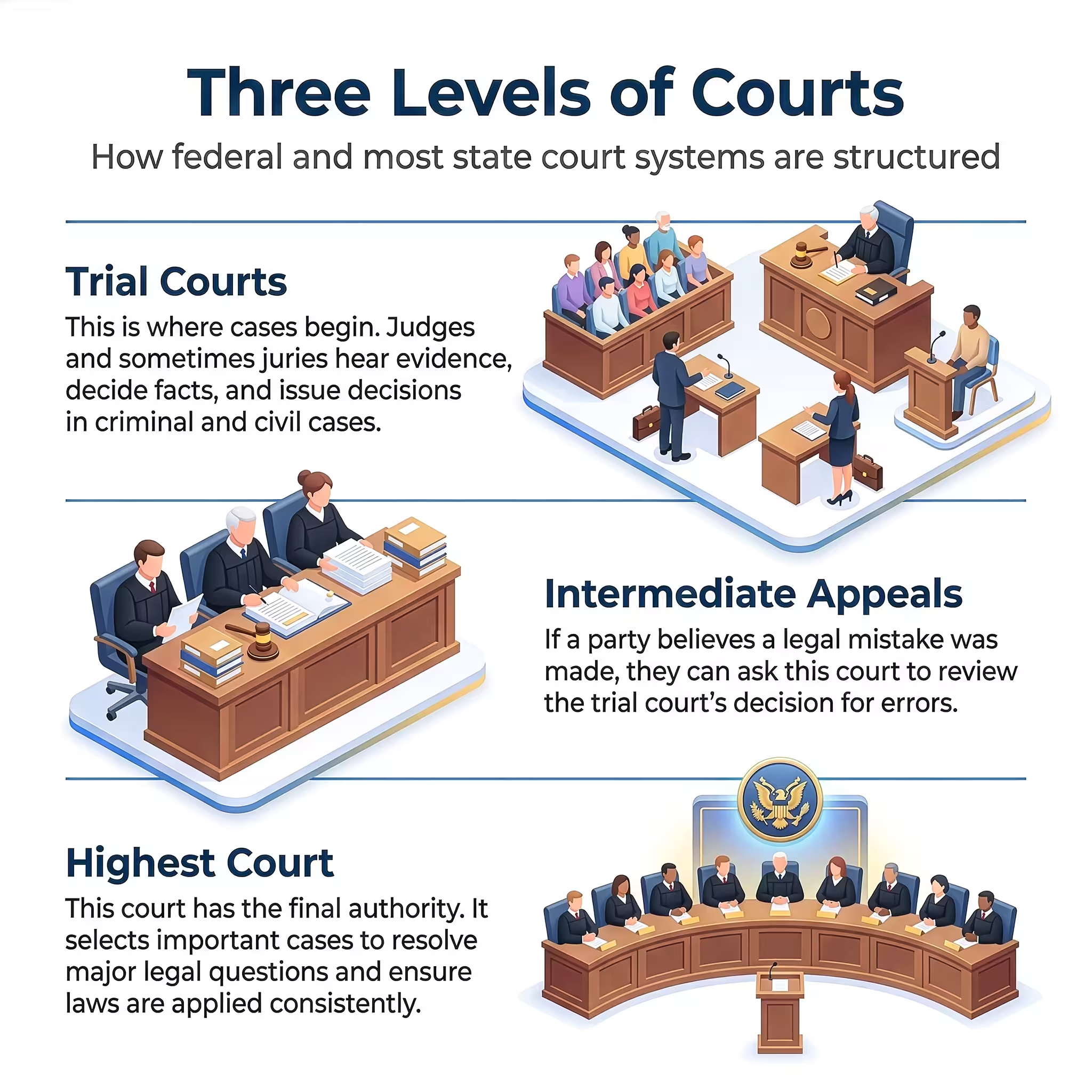
Get a Free ConsultationThe federal and most state judicial branches have at least these three levels in the court system: Trial courts, intermediate appellate courts, and highest appellate court.
The three-tier structure is the backbone of both the federal and most state court systems in the U.S.
Trial Courts are where cases originate. Evidence is presented, witnesses testify, and facts are established. In the federal system, these are the U.S. District Courts. At the state level, they go by various names (Superior Court, Circuit Court, District Court, etc., depending on the state).
Intermediate Appellate Courts review decisions from trial courts, but they don’t retry cases or hear new evidence. They examine whether legal errors were made in the lower court proceedings. Federally, these are the U.S. Courts of Appeals (the 13 circuit courts). Most, but not all, states have this level — a handful of smaller states skip it and appeal directly from trial to the highest court.
Highest Appellate Courts have the final say on matters of law within their jurisdiction. The U.S. Supreme Court sits at the top of the federal system, while most states call their equivalent the Supreme Court (though Texas and Oklahoma notably split this role between civil and criminal matters).